.jpg)


The Heritage of Stewardship: Bridging Ancient Wisdom and Modern Financial Freedom
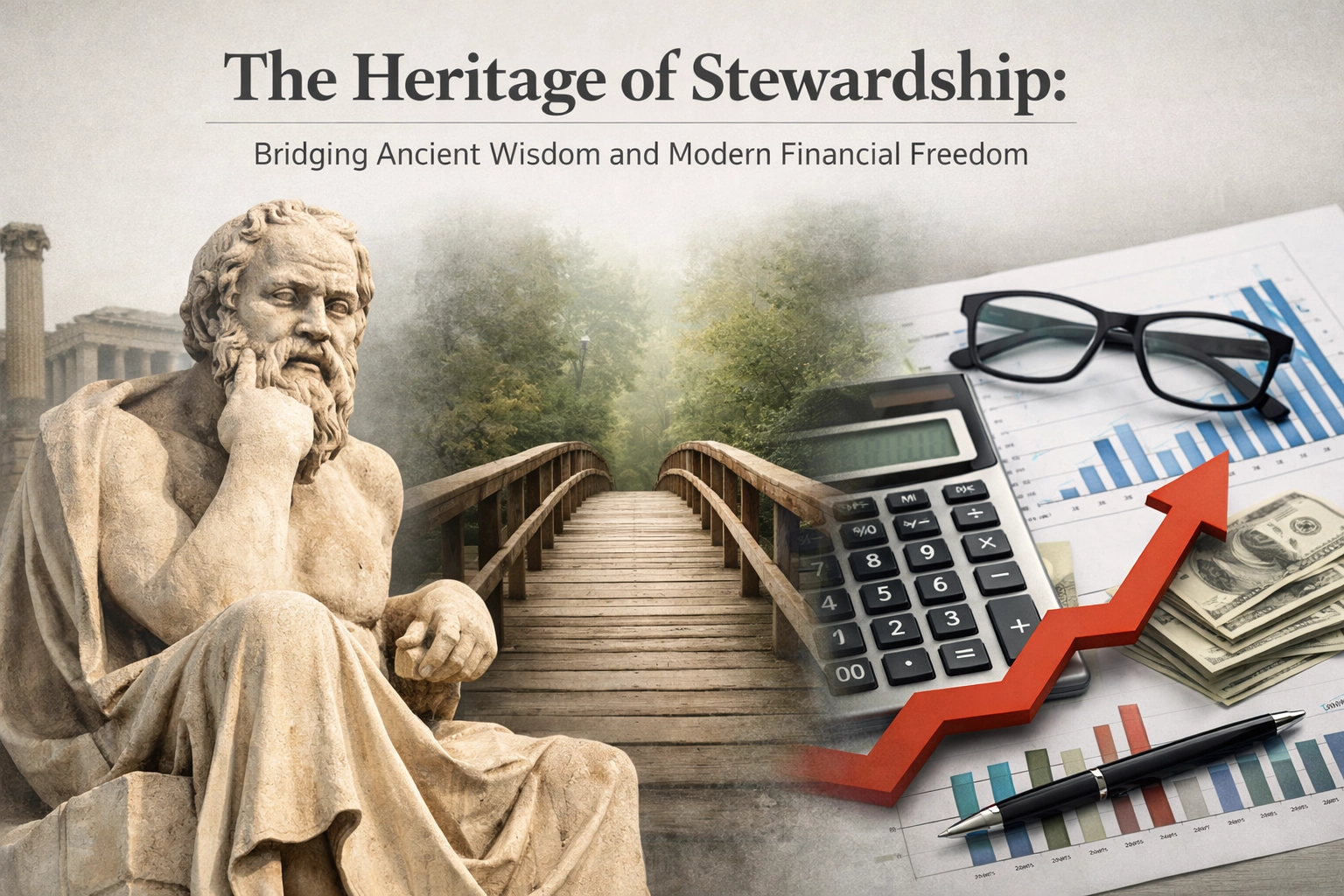
You've probably never thought about it this way, but there's a direct line between ancient desert law and your credit card statement. Stick with me here: this isn't some dusty history lesson. What our ancestors learned about managing resources in the wilderness holds the blueprint for financial freedom today.
From Foundation to Fulfillment: The Lineage of Money Rules
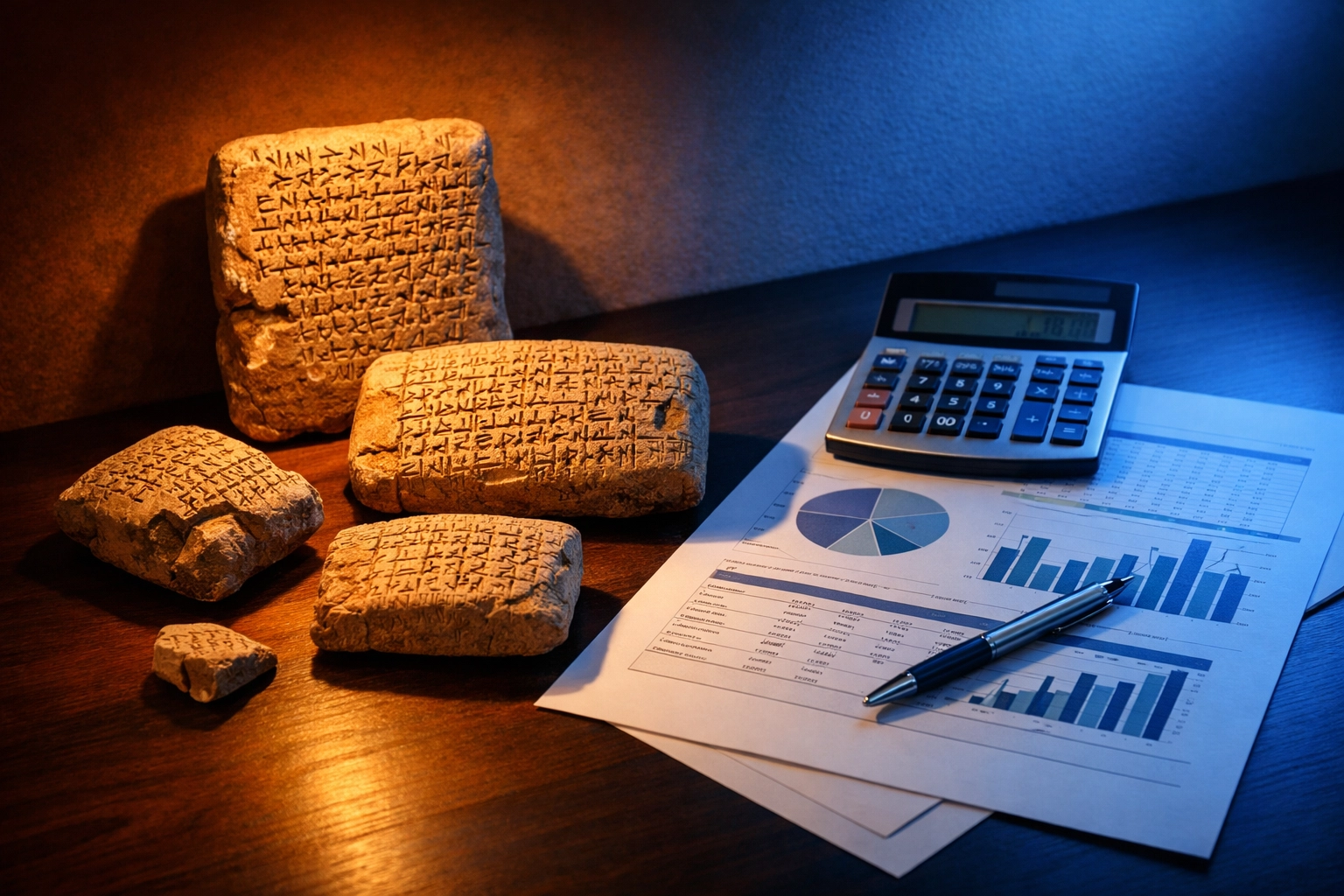
Let's start with Hammurabi's Code: arguably the world's first written financial regulations, carved in stone around 1750 BC. And no, we're not here to demonize it. Hammurabi’s code was foundational: it standardized accountability in a world where “justice” could be whatever the strongest guy said it was that day.
A big chunk of the code was basically a prosperity framework: clear standards, clear consequences, and—most important—restitution. In a lot of cases it wasn’t “go to jail forever,” it was paying fines measured in shekels (real money, real weights). In plain working-class terms: you broke it, you bought it—sometimes with extra on top. That’s not grace, but it is order.
Now here’s the outline upgrade most people miss: there’s a lineage of stewardship teaching that runs through the ancient world—through priestly governance and household leadership—and it shows up in Scripture long before Sinai.
Melchizedek shows up as “priest of God Most High” and Abraham responds with a tithe (a stewardship response, not a tax).
Abraham becomes a model of covenant household order: flocks, servants, contracts, and responsibility—wealth with accountability.
Midianites (often tied to the “wilderness discipline” stream; Jethro/Yethro’s household and counsel) become part of Moses’ training ground—practical leadership systems, delegation, community order.
Moses doesn’t invent order from scratch; he delivers a refined, covenant-based framework to a nation.
So the Mosaic Law wasn’t “Hammurabi but religious.” It was the next phase—moving from external enforcement to internal formation. And here’s the key shift you asked for:
Before the Golden Calf, the stewardship emphasis is heavily prosperity-code in feel: order, restitution, clean standards (think shekels/weights/measures—real-world economics). After the Golden Calf incident, you see a major ramp-up in sacrifice and purity rituals—not because God suddenly liked smoke, but because the people proved they couldn’t handle freedom without boundaries. The system expands into a “training wheels” phase: visible, repetitive rituals to rebuild a broken trust and re-center a rebellious nation.
That’s the shift we’re talking about: from “do the math and pay what you owe” (shekels/restitution) to “clean up the heart that keeps wrecking the math” (sacrifice/purity)—and eventually to full-blown stewardship: ownership mentality. From "I better not mess up" to "I'm responsible for something sacred."
The Wilderness Blueprint: Where Discipline Meets Destiny
Here's where it gets tactical. Moses, Jesus, and Paul: three of the most influential leaders in spiritual and ethical history: all spent significant time in the wilderness. Specifically, they were influenced by desert tribes like the Midianites (also called Yetimites in some traditions).
Why does this matter for your bank account?
Because the wilderness teaches discipline that cushy environments never could. Moses spent 40 years tending sheep in Midian before leading the Exodus. Jesus fasted 40 days in the desert before launching his public ministry. Paul retreated to Arabia for three years after his conversion. These weren't vacations: they were boot camps.

The desert strips away excuses. You can't blame circumstances when you're sleeping under stars and rationing water. You learn to manage scarce resources with surgical precision. You develop mental toughness that translates directly to financial discipline. This is Navy SEAL-level training for stewardship.
Think about it: in the wilderness, if you mismanage today's water, you die tomorrow. There's no overdraft protection in the desert. That kind of environment produces leaders who understand consequences, strategy, and long-term thinking. The same principles that kept them alive in physical deserts will keep your financial life thriving in economic ones.
Missing the Mark: Redefining Sin as Financial Failure
Let's tackle an uncomfortable word: sin. Strip away the religious baggage for a second and look at the original concept. The Greek word hamartia literally means "to miss the mark": like an archer who misses the target.
In a financial context, sin isn't about being a bad person. It's about failing to fulfill your role as a steward. When you're drowning in consumer debt, living paycheck to paycheck despite a decent income, or hoarding wealth without purpose: you're missing the mark. You're not hitting the target you were designed to hit.
Here's the brutal truth: debt is more than a financial problem. It's a spiritual obstacle. When you're chained to monthly payments, you can't respond to opportunities to serve, give, or build. You're stuck in survival mode instead of living in mission mode.
Debt makes you a slave to lenders instead of a steward for your calling. It prevents you from having dominion: not in a greedy, control-freak way, but in the sense of having the resources and freedom to make a difference. You can't bless others when you're barely keeping your own head above water.
Dominion Without Greed: The Kingdom Steward Mindset
Let's bust a myth right now: having dominion over money doesn't make you greedy. It makes you dangerous: dangerous to poverty, dangerous to limitation, dangerous to systems that want to keep you dependent.
Biblical dominion was never about hoarding wealth in some castle. It was about being equipped to serve and bless others. Joseph stored grain in Egypt: not for himself, but to save nations during famine. The wealth of the righteous was meant to be "laid up for the just" so they could accomplish Kingdom purposes.
When you have financial dominion, you can:
Take care of your family without stress
Be generous without hesitation
Pursue your calling without financial fear
Build multi-generational wealth that blesses your children's children
Be the answer to someone else's prayer
This isn't about buying yachts. It's about having enough margin to be the person who shows up when your buddy's business is struggling, or when your church needs funding for a community project, or when your kid wants to pursue their dreams without crushing student loans.

The Bridge to Modern Strategy: Ancient Principles Meet Current Tools
So how do we connect these ancient desert principles to your financial life in 2026?
The Debt Freedom Flywheel is the modern expression of wilderness discipline. Here's how it works:
Eliminate consumer debt using focused intensity (that Moses-in-the-desert discipline)
Reclaim cash flow that was bleeding out to interest payments
Redirect those dollars into wealth-building vehicles that protect and grow
Build momentum as freed-up cash compounds month after month
Achieve stewardship capacity where you have real dominion over resources
This isn't a get-rich-quick scheme. It's a systematic extraction from financial bondage into financial freedom. It's the Exodus story playing out in your budget.
Then you layer in strategic tools: like properly structured IUL (Indexed Universal Life) strategies that build tax-advantaged wealth while protecting your family legacy. These aren't just insurance products. They're modern mechanisms for the ancient principle of multi-generational provision.
Think of it this way: Moses led people out of slavery with a clear strategy and long-term vision. You're leading your family out of financial slavery using the same principles: just with different tools.
The Tactical Next Step
Here's your mission, should you choose to accept it:
Stop treating financial planning like a religious ritual you perform once a year and forget about. Start treating it like stewardship: a daily discipline that connects ancient wisdom with modern tools.
The wilderness taught our spiritual ancestors that discipline precedes freedom. That scarcity thinking must transform into abundance mindset. That resources are meant to be managed for purposes bigger than ourselves.
Your job isn't to be Hammurabi: following rules out of fear of punishment. Your job is to be a Kingdom steward: someone who manages resources with wisdom, purpose, and generational vision.
The ancient path isn't behind us. It's beneath us, waiting to be walked again with modern tools and timeless principles. The desert discipline that forged leaders thousands of years ago is the same discipline that will forge your financial freedom today.
Ready to bridge ancient wisdom with your financial future?Schedule a financial literacy consultation and let's build your strategic plan. This isn't about selling you products: it's about equipping you for stewardship.
The wilderness is calling. The question is: are you ready to answer?


Comments