.jpg)


The DNA of the Doorpost: Relationship, Not Religion
When God Wrote on Hearts Instead of Stone
Here's something they don't teach you in Sunday school or in your financial advisor's office: God's law was never about control, it was always about connection. And once you understand that principle, everything changes, from how you read Scripture to how you handle your money.
Jeremiah 31:33 drops this bomb: "I will put my law in their minds and write it on their hearts." Not carved in stone. Not locked behind religious gatekeepers. Written on your heart. That's the DNA of the doorpost, the blueprint that runs from ancient Babylon through Moses, all the way to Christ, and yes, straight into your bank account today.
The Core Truth: Moral Law Lives in Human Conscience
Romans 2:15 confirms something wild: even people who never heard of Moses or the Ten Commandments have moral law "written on their hearts." Their conscience bears witness. That means God was working universally, among Babylonians, Egyptians, tradesmen, merchants, long before He made a formal covenant with Israel.
This isn't religious trivia. This is strategic intel. If God embedded stewardship principles into human conscience from the beginning, then ignoring those principles, whether in your spiritual life or your financial life, is tactical failure.

Hammurabi and Melchizedek: The First "Kings of the East"
Let's rewind to Genesis 14:18-20. Abraham meets Melchizedek, a priest-king of righteousness who shows up out of nowhere, blesses Abraham, and receives tithes. No Levitical priesthood yet. No temple. Just a guy who understood covenant and stewardship before the "official" law was given.
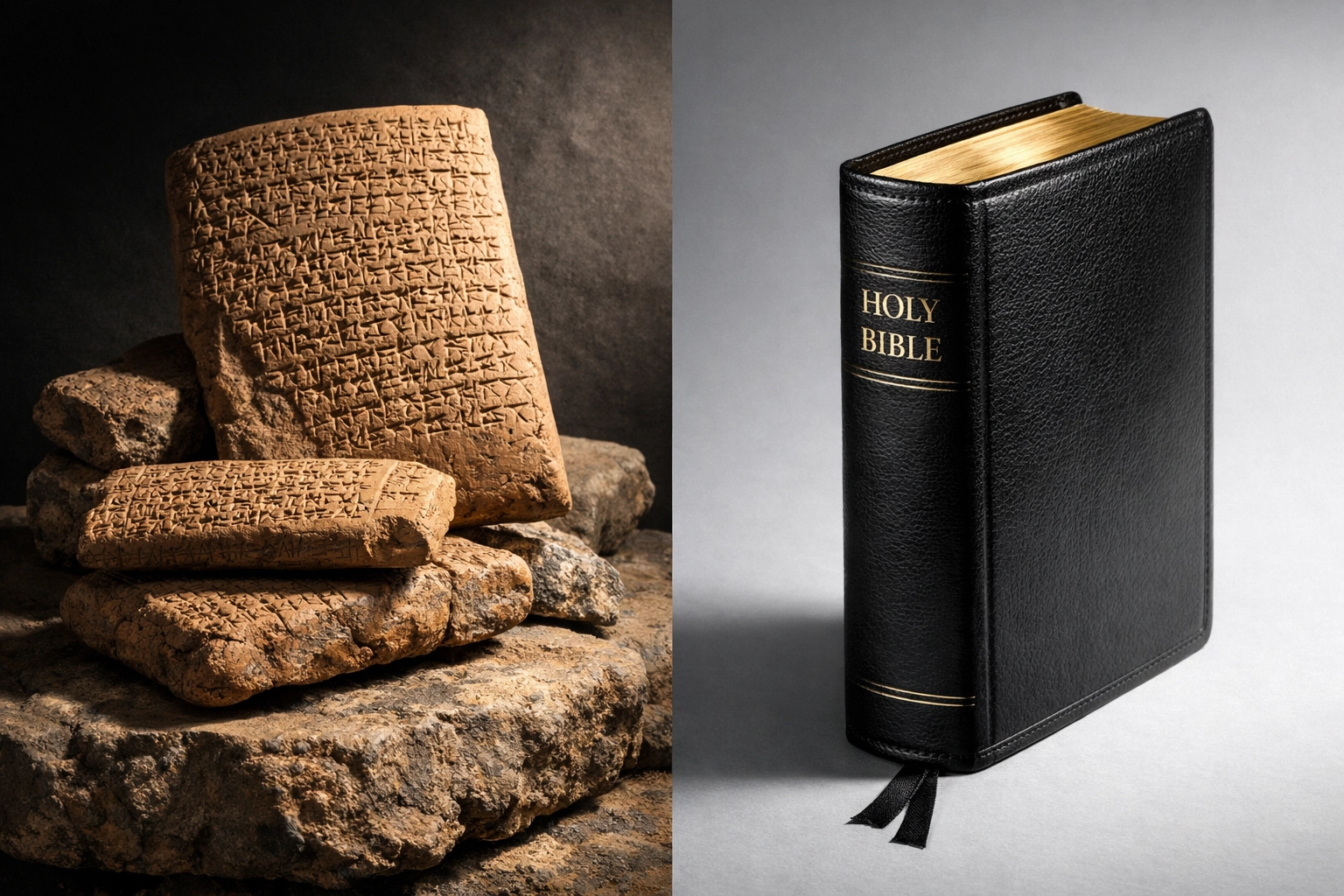
Now jump over to Hammurabi's Code (circa 1750 BC), one of the earliest written legal systems. Hammurabi understood something critical: justice, restitution, and civil order require a standard. His "currency" was silver, literal payment for wrongs. Eye for eye, tooth for tooth, shekel for shekel.
Here's the kicker: God didn't erase that framework. He upgraded it. He took what the nations already understood about justice and said, "Now let Me show you what mercy looks like."
Abraham: The Stewardship Blueprint
Genesis 18:19 tells us God chose Abraham "so that he will direct his children and his household after him to keep the way of the Lord by doing what is right and just."
Abraham wasn't just spiritual. He was a strategic wealth-builder. He had servants, livestock, land deals, battle strategy. He understood that faithfulness with resources is a test of your heart. God builds on existing moral truth rather than discarding it.
That's the same principle Jesus lays out in Luke 16:11: "If you have not been trustworthy in handling worldly wealth, who will trust you with true riches?"
Translation: Your budget is a spiritual X-ray. How you manage money reveals whether you're living in relationship or religion.
The Golden Calf: When You Substitute Ritual for Relationship
Exodus 32 is the ultimate cautionary tale. Moses goes up the mountain. The people freak out. They melt down gold, build a calf, and throw a party.
But here's what most people miss: they weren't rejecting God: they were trying to manufacture His presence on their terms. They wanted something they could see, control, and manage. They substituted representation for relationship.
Sound familiar? That's the same mistake people make with their 401(k)s. They hand over control to Wall Street, pray the market doesn't crash, and hope someone else will manage their future. It's the financial version of worshiping the golden calf.
God's response? "Obedience is better than sacrifice." You don't need a shiny object. You need a strategy rooted in relationship and stewardship.
Sacrifice Replaces Silver: The Currency Shifts
Under Moses, the "currency" of the law shifted from silver to sacrifice. Leviticus 17:11 explains it: "The life of a creature is in the blood, and I have given it to you to make atonement for yourselves."
This wasn't about payment: it was about obedience, humility, and remembrance. God was training His people to understand that life has value, sin has consequences, and restoration requires something beyond money.
But notice: He didn't eliminate stewardship. He elevated it. The sacrificial system required discipline, planning, and faithfulness. You couldn't just show up empty-handed and hope for the best.
Passover: Faith in Action
Exodus 12 shows the blueprint: Take a lamb. Apply the blood to the doorposts. Stay inside. Obey.
Hebrews 11:28 makes it clear: "By faith [Moses] kept the Passover and the application of blood, so that the destroyer of the firstborn would not touch the firstborn of Israel."
It wasn't the ritual mechanics that saved them. It was faith expressed through obedience. The blood on the doorpost was a visible declaration: "We trust God's plan more than our own."
That same principle applies to your debt freedom plan. You can read every blog post, watch every video, and never pull the trigger. Or you can take the step: restructure the debt, be your own bank, build Asset Armor: and watch God honor your faithfulness.
Christ Fulfills the Law: Mercy Over Sacrifice
Matthew 5:17: Jesus says, "Do not think that I have come to abolish the Law or the Prophets; I have not come to abolish them but to fulfill them."
And then in Matthew 9:13, He drops the mic: "Go and learn what this means: 'I desire mercy, not sacrifice.'"
The law reaches its goal in love. The sacrificial system pointed to something greater: a Savior who would pay the ultimate debt so you could walk in freedom. Jesus didn't just cancel the IOU; He restored the relationship.
That's the shift from religion to relationship. And it's the same shift you need to make financially. Stop living under the weight of compounding interest, market volatility, and Wall Street's broken promises. Start living in financial peace of mind rooted in strategic stewardship.
Letter vs Spirit: The Difference Between Death and Life
2 Corinthians 3:6: "The letter kills, but the Spirit gives life."
Galatians 5:6: "The only thing that counts is faith expressing itself through love."
Here's the translation: You can follow all the "rules" of traditional financial planning and still end up broke, stressed, and spiritually dry. Maxing out your 401(k), chasing 12% returns, and hoping the market cooperates: that's living by the letter.
Living by the Spirit means asking, "What does God want me to do with these resources? How do I build a legacy of stewardship, not just accumulation?"
That's where the EIUL "Best of Both Worlds" strategy comes in. You get the Sword (strategic growth tied to the S&P 500's 400%+ climb from 2012–2026) and the Shield (0% floor protection during crashes). You participate in the upside without getting slaughtered in the downside. You're not gambling. You're stewarding.
The Progression: From Silver to Spirit
Here's the table that changes everything:
Era | The "Currency" of the Law | The Goal |
Hammurabi | The Shekel (Silver) | Civil Order & Restitution |
Moses | The Sacrifice (Blood of Animals) | Training in Obedience |
Jesus | The Spirit (Blood of Christ) | Eternal Relationship & Heart Change |
Notice the progression. It's not random. God moved from external payment (silver) to symbolic obedience (sacrifice) to internal transformation (Spirit). The goal was never just behavior modification: it was heart change.
The same progression applies to your finances:
Broke mentality = living paycheck to paycheck, believing money is evil, accepting debt as "just part of life."
Religious financial planning = following the rules (401(k), mutual funds, term insurance) without understanding the strategy.
Covenant stewardship = recognizing money as a tool, breaking free from debt, and using finance as a spiritual testing ground.
The False Narrative vs The Covenant Narrative
Let's myth-bust the lies you've been sold:
The False "Broke, Poverty Mentality" Narrative:
Money is the root of all evil.
Debt is just a "fact of life."
Spirituality is separate from finance.
The Covenant Narrative:
Money is a tool of the Covenant inherited from the "Kings of the East" (Hammurabi).
Debt is a violation of the Law of Stewardship that Jesus came to pay and liberate us from.
Finance is the testing ground for spirituality (Luke 16:11).
You don't have to choose between being spiritual and being financially free. That's a false choice. God wants you walking in both.

Conclusion: Justice, Mercy, Humility
Micah 6:8 summarizes everything: "He has shown you, O mortal, what is good. And what does the Lord require of you? To act justly and to love mercy and to walk humbly with your God."
Justice means doing what's right: stewarding resources wisely, refusing to live under financial bondage.
Mercy means extending grace: to yourself, to your family, to your future.
Humility means walking in obedience: trusting God's strategy over Wall Street's marketing.
Christ restores us fully to God. And obedience reveals the heart. The question is: What does your bank account reveal about your heart?
If you're ready to stop living by the letter and start living by the Spirit: financially and spiritually: book a strategy call. Let's build your Asset Armor, create your debt freedom plan, and show you how to be your own bank.
Because the DNA of the doorpost isn't religion. It's relationship. And relationship changes everything.
Reuben Lowing Vice President / Agent My Business Is Your Business / All Into LIfe


Comments