.jpg)


Debt Snowball Vs Avalanche: Which Method Actually Helps You Pay Off Debt Faster?
You're staring at a stack of credit card statements, a car loan, maybe some lingering student debt, and you're asking yourself the same question everyone asks: "How do I actually get out of this?"
The internet loves throwing around two big strategies: the debt snowball and the debt avalanche. They sound catchy, almost fun. But here's the real question, which one actually helps you pay off debt fast?
Let's cut through the noise. If you're serious about breaking free from debt in 2026, you need more than a cute nickname for your repayment plan. You need a strategy that works with your psychology and your math. Think of it like a Navy SEAL mission: you need discipline, a clear objective, and the tactical know-how to execute under pressure.
Ready? Let's break it down.
What Is the Debt Snowball Method?
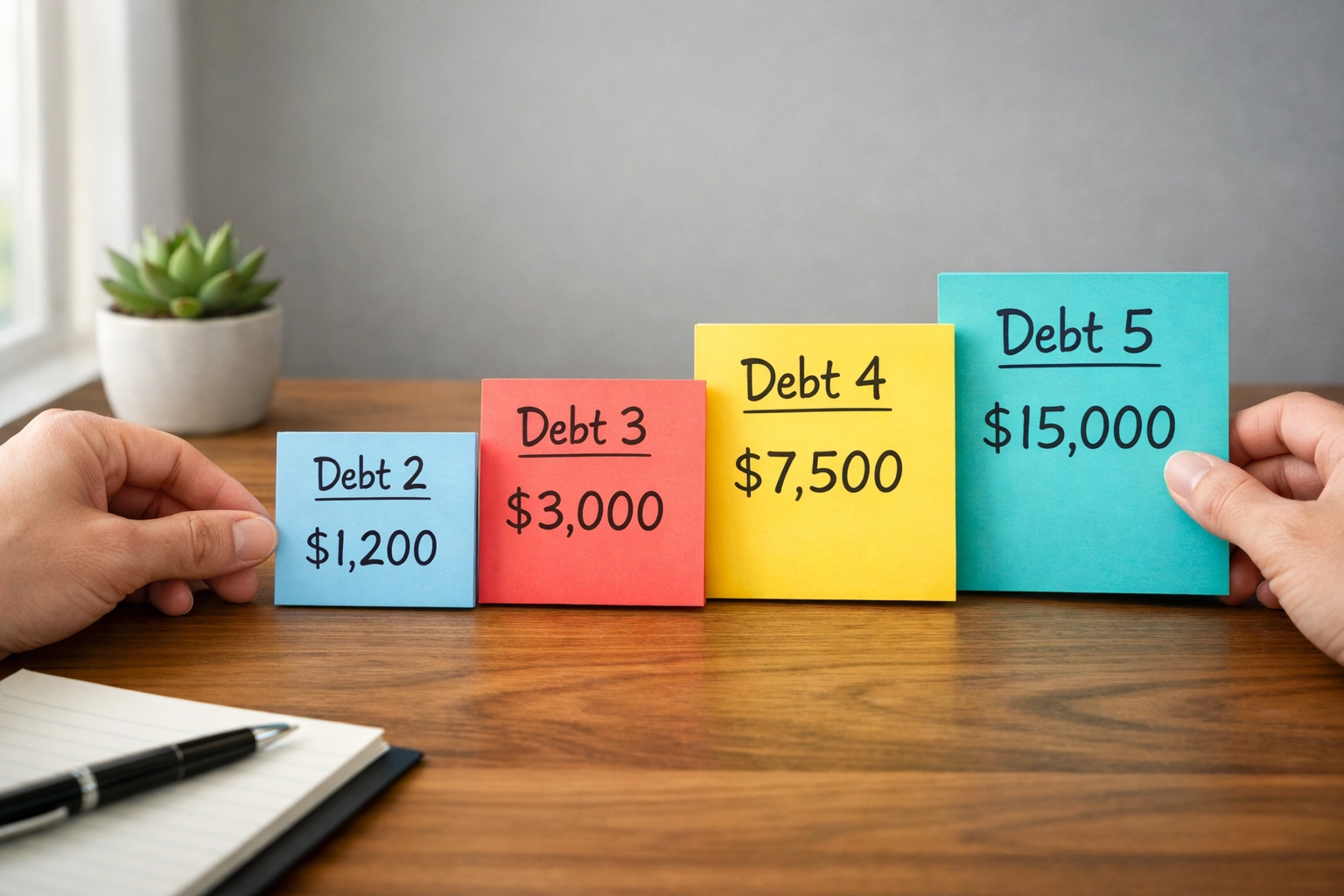
The debt snowball is simple: pay off your smallest debt first, regardless of interest rate. Once that's gone, roll that payment into the next smallest debt, and so on. It's called a "snowball" because your payments grow as you knock out each balance.
The appeal? Quick wins. You get that rush of crossing a debt off your list, which can be a serious motivator when you're drowning in payments.
The downside? You might be ignoring a 24% APR credit card while you celebrate paying off a $300 medical bill. That high-interest debt is growing in the background, costing you real money.
What Is the Debt Avalanche Method?
The debt avalanche flips the script: attack your highest-interest debt first. You make minimum payments on everything else and throw every extra dollar at the debt costing you the most.
The appeal? This is math in your favor. You're cutting down interest faster, which means you're reducing your total balance more quickly. Once you eliminate that expensive debt, you're no longer bleeding money to interest every month.
The downside? It can feel slow at first. If your highest-interest debt is also your biggest balance, you might not see a "win" for months. That can mess with your motivation.
So Which Method Actually Helps You Pay Off Debt Faster?
Let's get straight to it: the debt avalanche method helps you pay off debt faster overall. Period.
Here's why. High-interest debts accumulate faster. Every month you let them sit, they're eating away at your financial progress. When you prioritize those debts, you're not just paying down balances, you're stopping the bleeding. You're freeing up cash flow that would've gone to interest, and redirecting it toward your remaining debts.
The snowball method feels faster because you're clearing individual debts quickly. And hey, that psychological momentum is real. But feelings don't change the fact that you're potentially spending months (or years) longer in debt, and paying hundreds or thousands more in interest along the way.
The trade-off is this: The avalanche prioritizes total time and money savings. The snowball prioritizes motivation.
The Navy SEAL Mindset: Discipline Meets Finance
Here's where most people get it wrong. They treat debt payoff like a motivation problem. "If I just feel good about my progress, I'll stick with it."
Wrong.
Navy SEALs don't rely on feeling motivated. They rely on discipline, clarity of mission, and execution under pressure. Your mission? Get out of debt as fast as possible with the least amount of financial damage.
That means choosing the avalanche method, even when it's not the "fun" option. It means making the hard call to attack that $8,000 credit card at 22% APR before you touch the $1,200 store card at 9%.

Discipline is doing the right thing even when it's uncomfortable. And paying off debt fast isn't about comfort: it's about freedom.
But here's the thing: discipline alone isn't enough. You need a system that creates momentum. That's where the Debt Freedom Flywheel comes in.
The Debt Freedom Flywheel Approach
Think of a flywheel. It takes serious effort to get it moving, but once it's spinning, it builds its own momentum. The Debt Freedom Flywheel works the same way for how to pay off debt fast.
Here's how it works:
Step 1: Execute the Avalanche List your debts from highest to lowest interest rate. Minimum payments on everything except the top one. Every extra dollar goes to that high-interest monster.
Step 2: Automate Your Attack Set up automatic payments so you're not relying on willpower every month. Treat your debt payment like a bill you can't skip: because it is.
Step 3: Free Up Cash Flow As you eliminate each high-interest debt, that payment doesn't disappear: it rolls into the next debt on your list. This is where the flywheel starts spinning faster.
Step 4: Build Your Cash Cushion Once you've knocked out the high-interest debts, redirect some of that freed-up cash flow into a small emergency fund (even $500-$1,000). This keeps you from sliding back into debt when life throws a curveball.
Step 5: Accelerate Now the flywheel is moving. You're paying less in interest, freeing up more cash, and building momentum toward total debt freedom. You're not just surviving: you're gaining ground.

When the Snowball Method Might Make Sense
Look, I'm not here to tell you the snowball method is garbage. For some people, it's the right move: if you know yourself well enough to admit you need those early wins to stay in the fight.
If you've tried the avalanche before and gave up because it felt too slow, the snowball might be your bridge to discipline. Get a couple of quick wins under your belt, build that confidence, then transition to the avalanche for the heavy lifting.
But be honest with yourself. Are you choosing the snowball because it's the right strategy, or because it's the comfortable one?
How to Pay Off Debt Fast: The Tactical Breakdown
Here's your mission brief. Follow this, and you'll be on the path to financial freedom faster than you think.
1. List Every Debt Write down every balance, every interest rate, every minimum payment. You can't fight what you can't see.
2. Rank by Interest Rate Highest APR at the top. That's your primary target.
3. Cut the Fat Look at your spending. Where can you find an extra $50, $100, $200 a month? Cancel subscriptions you don't use. Cut back on eating out. Sell stuff you don't need. This isn't forever: it's a tactical sacrifice.
4. Attack Minimum payments on everything except your highest-interest debt. Every extra dollar goes there.
5. Stay Disciplined No new debt. No exceptions. You're in mission mode.
6. Repeat Once that first debt is gone, roll that entire payment into the next one. Keep the flywheel spinning.

The Real Cost of Waiting
Here's the part most people don't want to hear: every month you wait costs you money. That high-interest credit card isn't getting cheaper. That car loan isn't magically going away. Time is not on your side when you're in debt.
But here's the good news: the moment you take action: the moment you commit to a strategy and execute: you start winning. Not tomorrow. Not next year. Today.
Ready to Build Your Debt Freedom Flywheel?
Whether you're carrying credit card debt, student loans, medical bills, or a combination of everything, you don't have to figure this out alone. At My Business Is Your Business/All Into Life, we help families and individuals create custom financial strategies that actually work for their lives.
Debt payoff isn't just about numbers on a spreadsheet: it's about reclaiming control, building momentum, and creating a future where your money works for you, not against you.
If you're ready to get serious about how to pay off debt fast and build real financial freedom, let's talk. We'll map out your Debt Freedom Flywheel and give you the tactical plan to execute.
Because discipline meets finance. And freedom is closer than you think.


Comments